


Alfalfa, known as the "Queen of Forages", is the most widely cultivated perennial legume, playing a major role in the global livestock industry due to its high yield, rich protein content, and strong adaptability. As climate change poses increasing threats to agriculture, unlocking the genetic basis of alfalfa's resilience is a strategic imperative for ensuring global feed and food security.
Recently, Forage Breeding and Cultivation Research Team has published a landmark study in Nature Communications. The paper, titled "Medicago super-pangenome reveals adaptive advantages and evolutionary constraints in autotetraploid alfalfa", unveils the fundamental genetic trade-off controlled by a special class of “tetra-copy core genes” those are responsible for both alfalfa's remarkable adaptability and its evolutionary constraints.
The research team generated a high-quality, haplotype-resolved genome from the major alfalfa cultivar ‘Zhongmu No. 4’ (ZM4_V2.0), achieving a contig N50 of 5.45 Mb and a total size of 3.13 Gb. Integrating this with 12 other genomes from seven Medicago taxa, they constructed a comprehensive super-pangenome, providing an unprecedented view of genetic variation across the genus.
Through detailed analysis, the study identified a group of "tetra-copy core genes"—core genes of the Medicago genus those are retained in four copies in alfalfa. They discovered these genes were central to a critical genetic trade-off. On the one hand, these genes are significantly enriched in climate-adaptation-associated genes and are crucial for stress tolerance. On the other hand, this adaptive advantage may come at a long-term cost, as the process of adaptation also leads to the accumulation of deleterious variants.
To validate their findings, the team selected a representative gene, MsGDC (the glycine decarboxylase), and created transgenic alfalfa plants that overexpressed it. The results showed overexpressing MsGDC significantly boosted both biomass and nitrogen use efficiency, confirming the powerful potential of these tetra-copy core genes.
The study outlines a powerful new strategy for modern alfalfa breeding: use molecular design tools to precisely harness the adaptive superiority of the tetra-copy core genes while simultaneously managing their associated deleterious variants. This approach is key to developing new alfalfa cultivars with wide adaptability, high yield, and robust stress resistance.
This research was a collaborative effort involving researchers from the Agricultural Genomics Institute at Shenzhen (CAAS), Washington State University, and the Chinese Academy of Tropical Agricultural Sciences. The project received support from major funding bodies, including the Biological Breeding-National Science and Technology Major Project.
(https://doi.org/10.1038/s41467-025-67280-9)
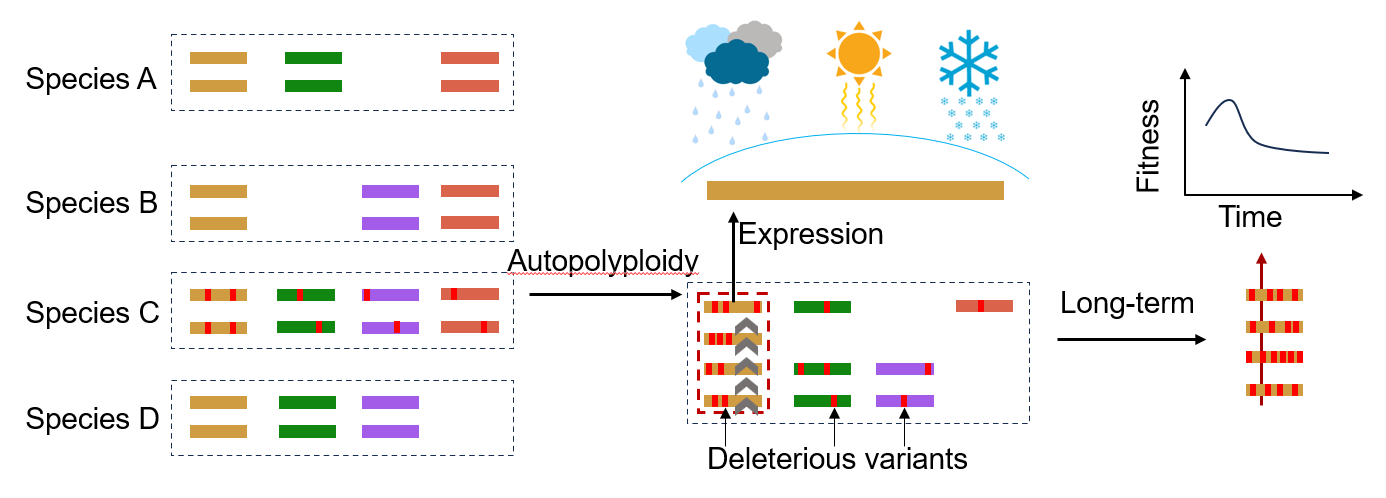
Figure1 Model of evolutionary consequences of autopolyploidy: impacts on adaptive advantages and long-term evolutionary fate.