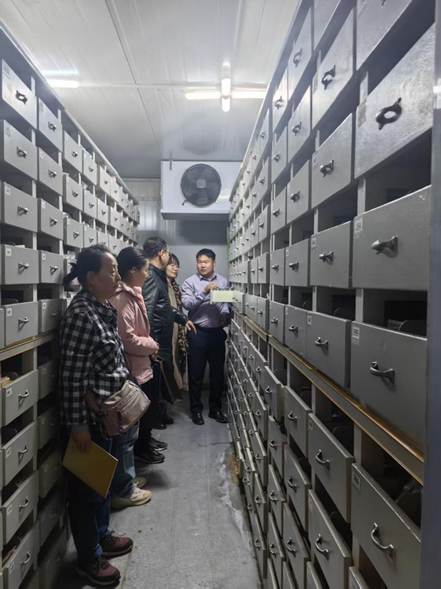


Recently, a delegation led by Dr. Wang Xuemin, Chief of the Forage Germplasm Resources Team of the Institute of Animal Science, Chinese Academy of Agricultural Sciences, went to Mongolia for academic exchanges and cooperation discussions. During the visit (October 14-20), the delegation successively visited Mongolia University of Life Sciences, Mongolian Academy of Agricultural Sciences, and Mongolian Grassland Management Association. A series of cooperation intentions were reached around core issues such as the research on forage germplasm resources in the Mongolian Plateau, joint postgraduate training, and personnel exchanges, laying a solid foundation for in-depth cooperation between China and Mongolia in the forage grass field.
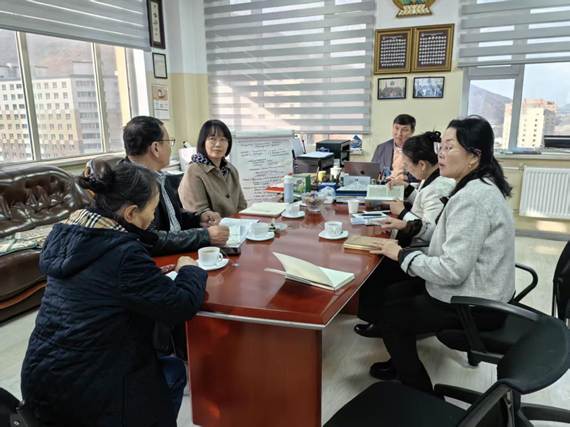
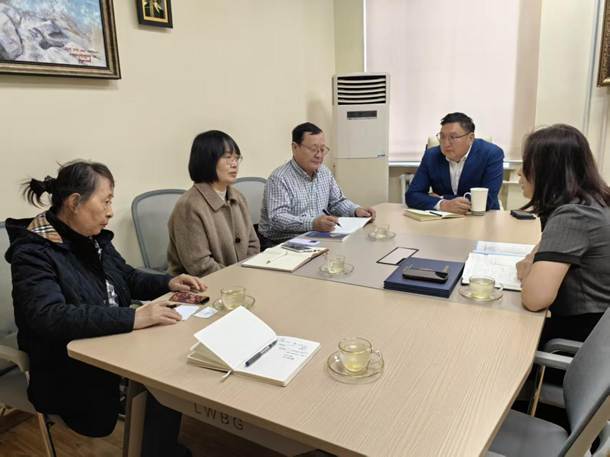
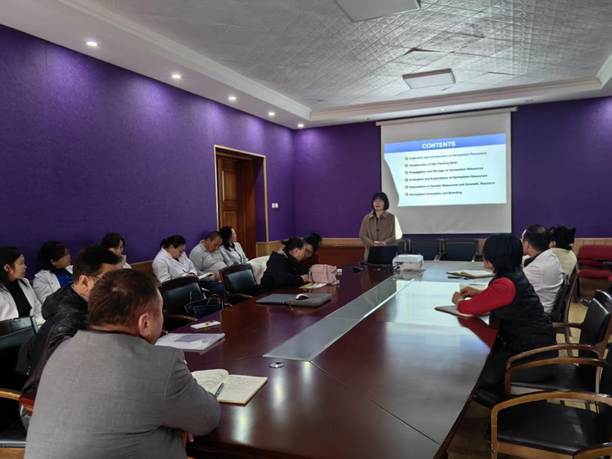
Buyanbaatar Avirmed, President of Mongolia University of Life Sciences, Bakyei Agipar, Academician of Mongolian Academy of Agricultural Sciences, and Researcher Daoligesurong, Head of Mongolian Grassland Management Association, warmly received the delegation respectively. They extended a sincere welcome to the Chinese team and gave a detailed introduction to Mongolia's research foundation and development needs in the fields of forage resource protection and grassland ecological management. In response, Dr. Wang Xuemin introduced the disciplinary composition, research overview and achievements of IAS-CAAS in detail. As a key academic exchange link of this visit, Dr. Wang Xuemin delivered a special report titled "Collection, Conservation, and Innovative Utilization of Forage Germplasm Resources" at Mongolia University of Life Sciences and Mongolian Academy of Agricultural Sciences successively. The report systematically expounded the breakthrough achievements made by the Forage Germplasm Resources Team of IAS over the years in resource census and collection, precise identification and evaluation, innovative breeding, and industrial application. It also conducted an in-depth analysis of the unique value and development potential of forage resources in the Mongolian Plateau, which aroused wide resonance among Mongolian experts and scholars. Both sides held enthusiastic discussions on key issues such as resource sharing and technological research, and reached a preliminary consensus on jointly carrying out the breeding of unique forage varieties in the Mongolian Plateau and the research on stress resistance mechanisms.
To further deepen practical cooperation, the delegation conducted on-site inspections of the laboratory of the College of Agricultural Ecology of Mongolia University of Life Sciences, and gained a detailed understanding of its research plans and practical experience in grassland vegetation restoration and ecological restoration technology. The delegation also visited the Plant Germplasm Resource Gene Bank of Mongolia's Ministry of Agriculture and the laboratory of the Institute of Animal Husbandry Science. In-depth exchanges were conducted with relevant person in charge on long-term germplasm resource preservation technology, innovative utilization models, and data sharing mechanisms, and the cooperation paths between the two sides in technical complementarity and platform co-construction were clarified.
This visit is an important measure for IAS to implement the national agricultural science and technology international cooperation strategy. It not only fully demonstrated China's scientific research strength in the field of forage germplasm resources, but also built a bridge for regular exchange and cooperation between China and Mongolia. In the next step, IAS will accelerate the promotion of the signing of cooperation agreements with relevant institutions in Mongolia, refine specific cooperation contents such as joint postgraduate training plans, joint application for scientific research projects, and personnel exchange visits. Focusing on the common needs such as the protection and efficient utilization of forage resources in the Mongolian Plateau and the sustainable development of grassland ecology, IAS will work together to overcome key technical problems and provide strong scientific and technological support for the high-quality development of animal husbandry in both countries.